Round table on the development of the Roadmap for the development of a green, circular economy of the Vitebsk region was held in Vitebsk

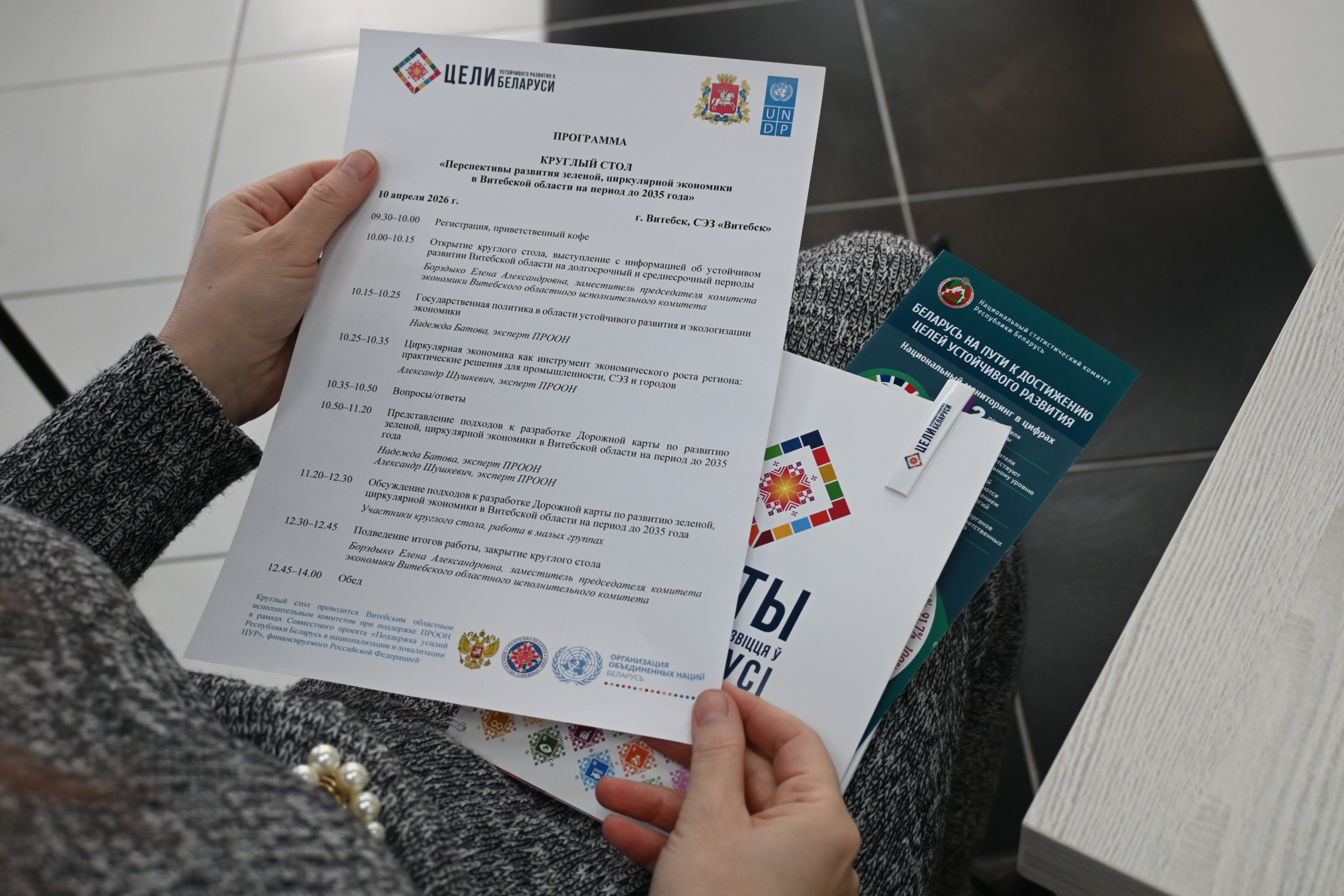
On April 10, 2026, the round table “Prospects for the Development of a Green, Circular Economy in the Vitebsk Region for the Period Up to 2035” was held in Vitebsk.
The event was opened by Elena Borzdyko, First Deputy Chairperson of the Economics Committee of the Vitebsk Regional Executive Committee. She highlighted that the round table would make it possible to identify key issues specific to the Vitebsk region, identify goals and objectives in the field of sustainable development, and discuss opportunities to promote a green, circular economy in the region.
According to Elena Borzdyko, the Vitebsk region is already making efforts to achieve the Sustainable Development Goals. In 2025, with the support of the United Nations Development Programme (UNDP) in Belarus, the Regional Strategy for the Sustainable Development of the Vitebsk Region for the Period Up to 2040 was developed and approved, and events and forums dedicated to sustainable development are regularly held. Another forum is planned for 2026, which will focus on the development of women’s entrepreneurship, which is especially symbolic in the Year of the Belarusian Woman.
Nadezhda Batova, UNDP expert, informed about the state policy in the field of sustainable development and greening of the economy, stressing that these areas are now considered as strategic priorities of the country. According to her, the state consistently forms the regulatory and institutional framework, integrates environmental principles into sectoral programs and regional strategies, which allows building long-term solutions and stimulates the transition to a low-carbon growth model, the introduction of resource-saving technologies and the development of circular approaches.
Nadezhda Batova also noted that it is the regions that are the key link in the implementation of the green economy. Practical results are generated here — efficiency, economic growth, new jobs and investments. At the local level, the effect of the introduction of green technologies, energy efficiency initiatives, waste management and the development of environmentally oriented businesses is faster.
Alexander Shushkevich, UNDP expert, outlined the possibilities of the circular economy as a tool for the sustainable development of the Vitebsk region, focusing on practical measures for industry, FEZ and cities. He highlighted that the transition to circular models can increase the competitiveness of the regional economy and create new opportunities for sustainable development.
During the event, the UNDP experts also presented approaches to the development of the Roadmap for the Development of a Green, Circular Economy in the Vitebsk Region Until 2035, emphasizing that the Roadmap is a tool that allows the introduction of a green, circular economy in the region as a managed, systematically built model.
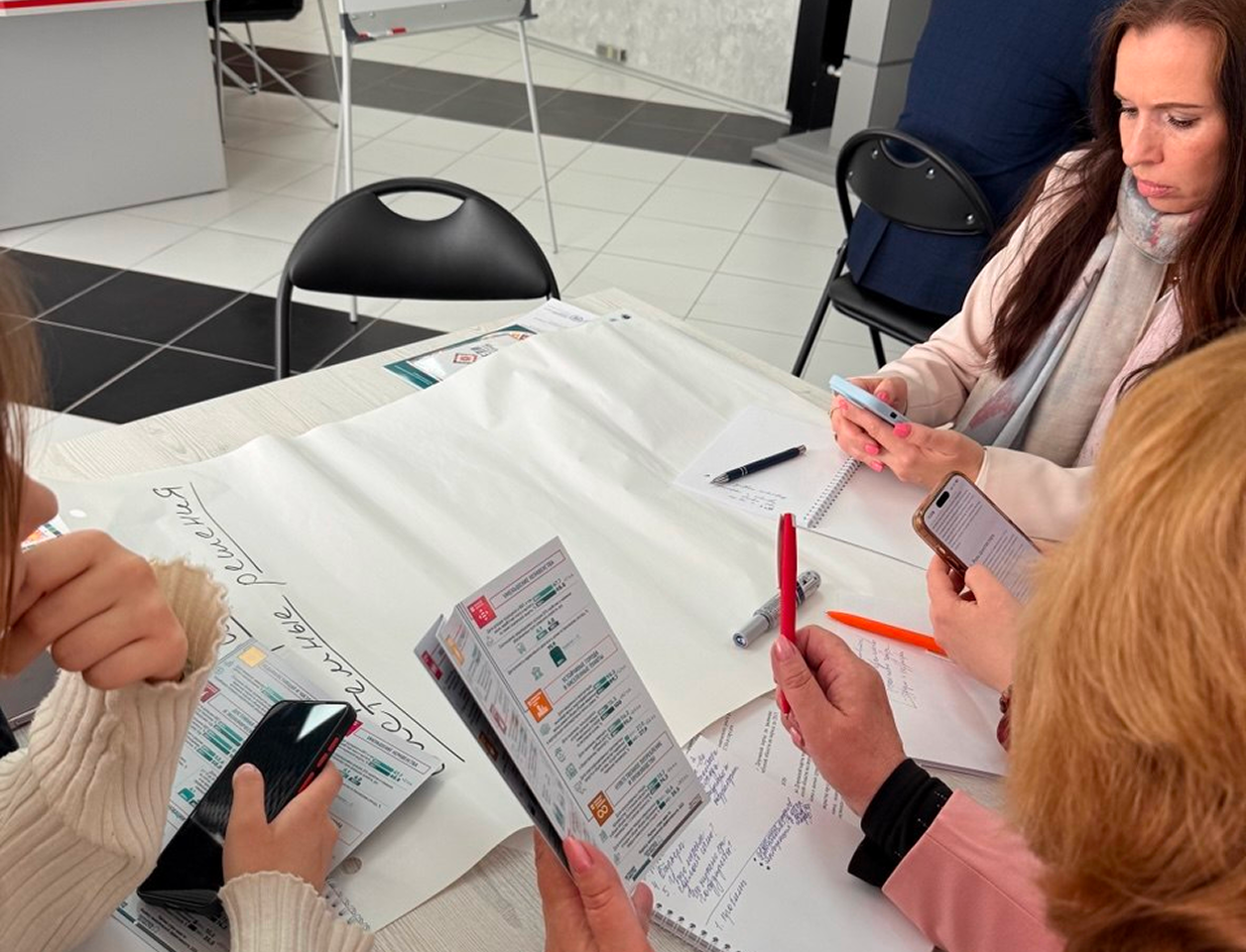
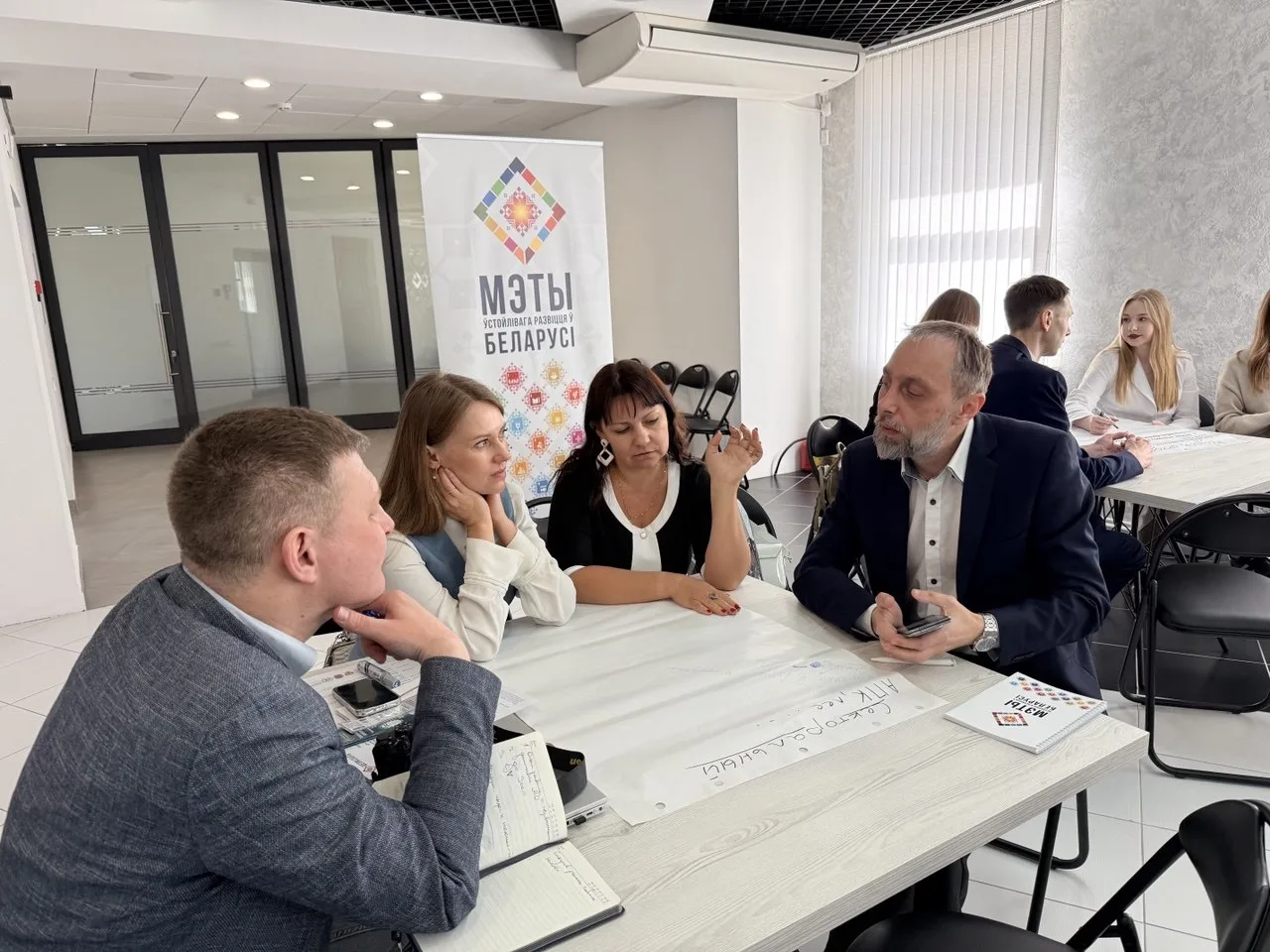
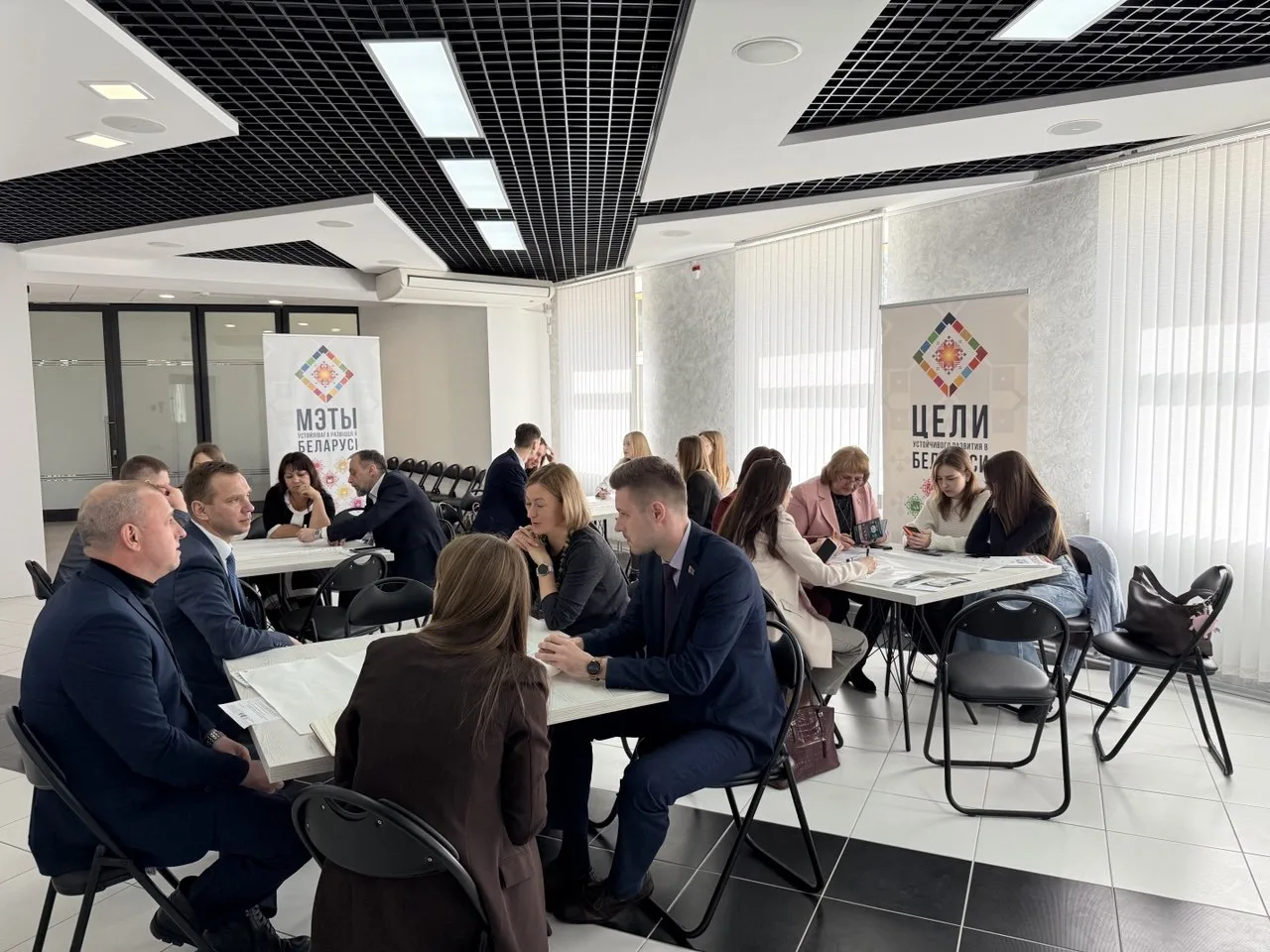
In the format of small groups, the participants of the round table discussed approaches to developing the Roadmap in the following areas:
- Territories and system solutions (housing and communal services, construction, sustainable cities, tourism, territorial development, ESG approaches and digitalization).
- Industry (resource efficiency, lean manufacturing, industrial symbiosis, clusters, FEZ).
- Sectoral contour (agroindustrial complex, bioeconomics, forest complex, energy, climate).
- Resources, waste, and circular practices (waste and secondary resource management, ecodesign, packaging, and product lifecycle extension).
As a result of working in small groups, the participants formed a common understanding of what solutions can form the basis for the future green transformation of the Vitebsk region. Among the proposed solutions:
- Increasing the share of electric transport and developing an electric charging infrastructure network.
- Implementation of innovative “smart” energy consumption monitoring and management systems.
- Development of circular symbiosis between organizations.
- Creation of a unified database of types of waste generated at enterprises.
- Organization of offline platforms for the exchange and sale of unnecessary items by the population.
- Improving the efficiency of using forest resources by expanding the range of products, including those produced by small businesses.
- Development of cooperation between enterprises and universities in promoting the principles of the green economy.
- Creating sustainable and comfortable areas for living and recreation with the active participation of residents.
- Development of tourist growth points with affordable infrastructure.
- Increasing the digital recognition and “visibility” of the region.
- Positioning of the Vitebsk International Art Festival “Slavyansky Bazar” as a sustainable event.
- Preservation and promotion of the agricultural heritage of flax production in Vitebsk region at the international level and other initiatives.
Presentations:
The round table was held by the Vitebsk Regional Executive Committee with the support of the UNDP within the framework of the Joint Project “Support to the Efforts of the Republic of Belarus in Nationalization and Localization of SDGs”, funded by the Russian Federation.