Forum “Clean Energy: Belarus and Russia’s Contribution to Achieving the Sustainable Development Goals” was held in Minsk
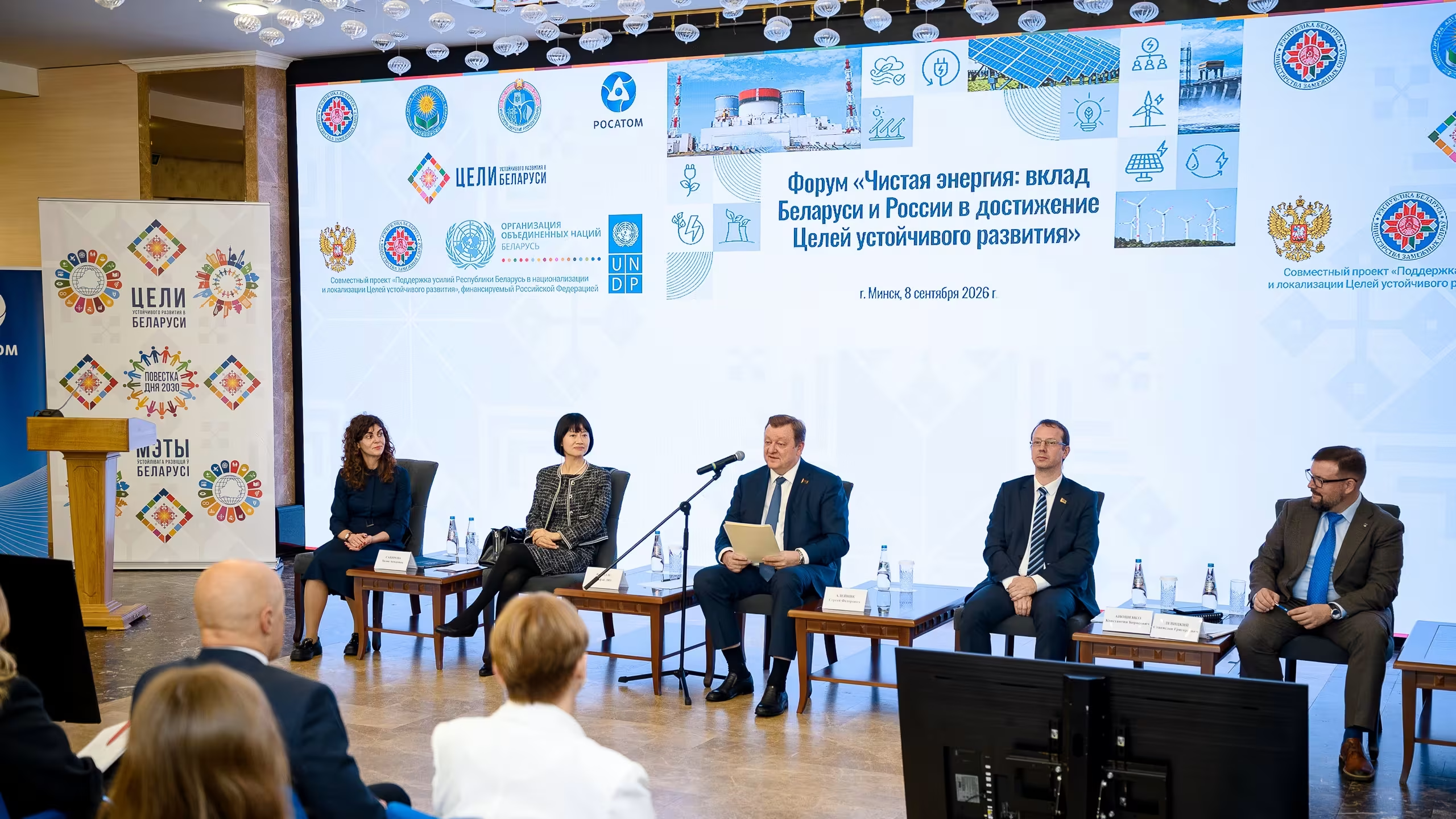
On September 8, 2026, the forum “Clean Energy: Belarus and Russia’s Contribution to Achieving the Sustainable Development Goals” was held in Minsk.
The Forum was aimed at promoting the ideas and values of sustainable development, with a focus on the topic of “clean energy,” as well as on developing partnerships and cooperation between the Republic of Belarus and the Russian Federation.


A total of 109 people participated in the Forum, including representatives of parliament, ministries, the private sector, youth, UN agencies, and the Russian Federation, of whom 60% were women and 50% were young people.
The Forum’s program included a plenary session and a thematic intellectual game called “What? Where? “When?” on the topic of sustainable development.
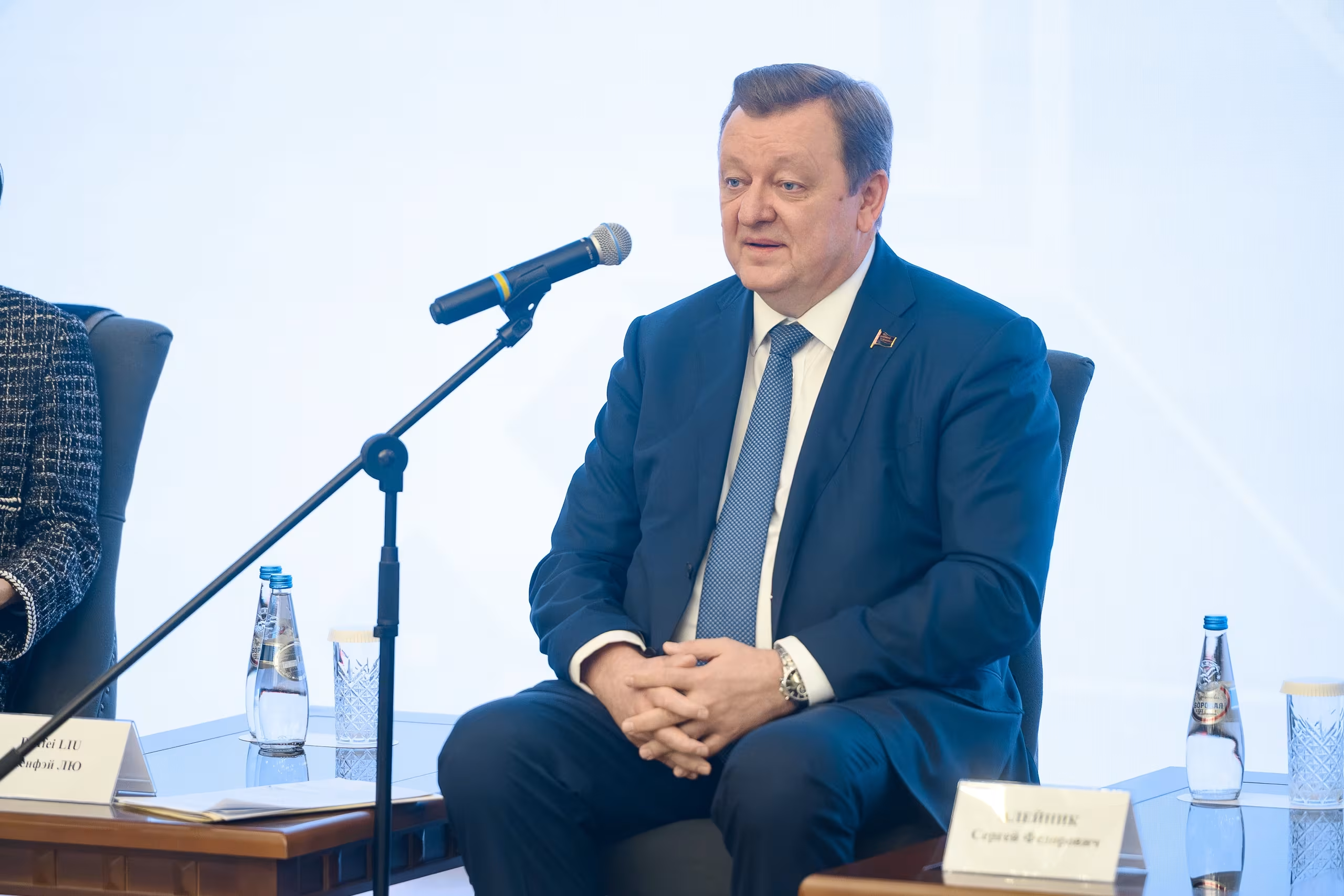
The Forum was opened by Sergei Aleinik, Chairperson of the Standing Committee on International Affairs and National Security of the Council of the Republic of the National Assembly of the Republic of Belarus, National SDG Coordinator. He emphasized the uniqueness of the event, which combines a deep and substantive discussion about the future of energy with a dynamic, creative intellectual debate. He noted that the Republic of Belarus is an active and responsible participant in the implementation of the 2030 Agenda and, thanks to the systematic work of the state, is among the most advanced countries in terms of achieving the SDGs: it ranks 35th in the international SDG ranking in 2026, demonstrates a cumulative SDG implementation rate of about 83% and has achieved four Goals ahead of schedule — “No poverty”, “Clean Water and Sanitation”, “Reduce Inequalities” and “Life on Land”. The National SDG Coordinator drew attention to the contribution of Belarus and Russia to the energy sector and noted the joint prospects for further expansion of nuclear power generation. He also emphasized that Belarus is looking to the future and is doing everything to ensure that children and grandchildren live in a peaceful and prosperous state.
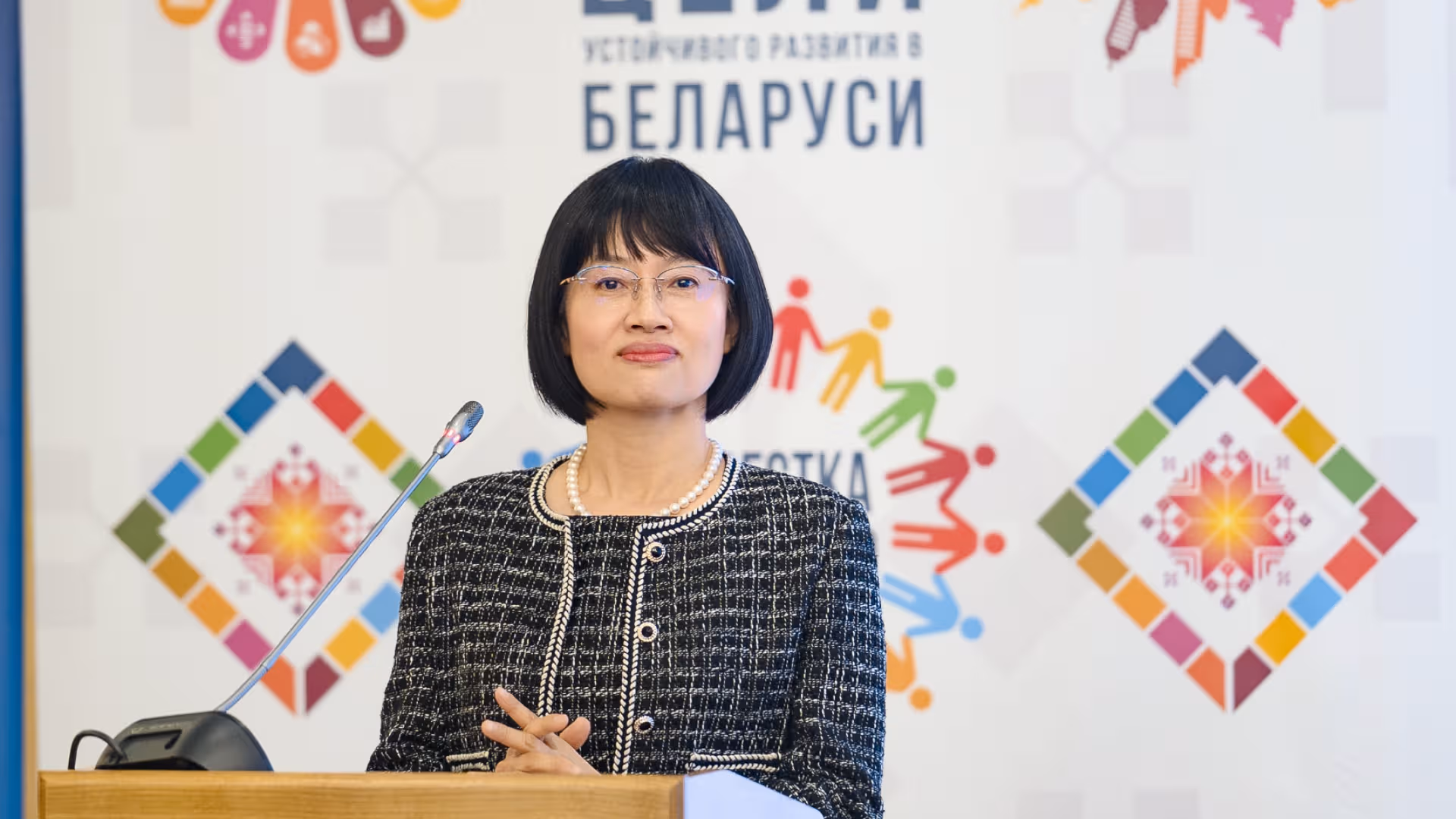
In her welcoming remarks, Renfei Liu, UNDP Resident Representative in the Republic of Belarus, noted that creating sustainable and reliable energy systems is both a serious challenge and a significant opportunity to stimulate green economic growth, improve production efficiency, and support business. She emphasized that UNDP is implementing one of the largest portfolios of projects in the UN system in the field of sustainable energy, which includes around 400 initiatives in more than 130 countries, and played a key role in developing the UN-Energy Work Programme 2026-2030. Renfei Liu noted that over the past 20 years, UNDP has supported the development of sustainable energy in Belarus through projects with a total value of over 30 million US dollars. Among the projects are the development and implementation of low‑carbon development strategies and national approaches to the development of a green and circular economy, the development of a network of more than 700 green schools, and the development of digital solutions for the efficient use of energy in small towns and rural areas. In 2026, UNDP, together with the Eurasian Development Bank, launched a new initiative aimed at turning energy efficiency solutions into investment opportunities. Renfei Liu emphasized that SDG achievement requires a strong partnership between the government, businesses, financial institutions, the academic community, young people, and international partners, and expressed confidence that the Forum will become an effective platform for strengthening cooperation and developing joint initiatives.
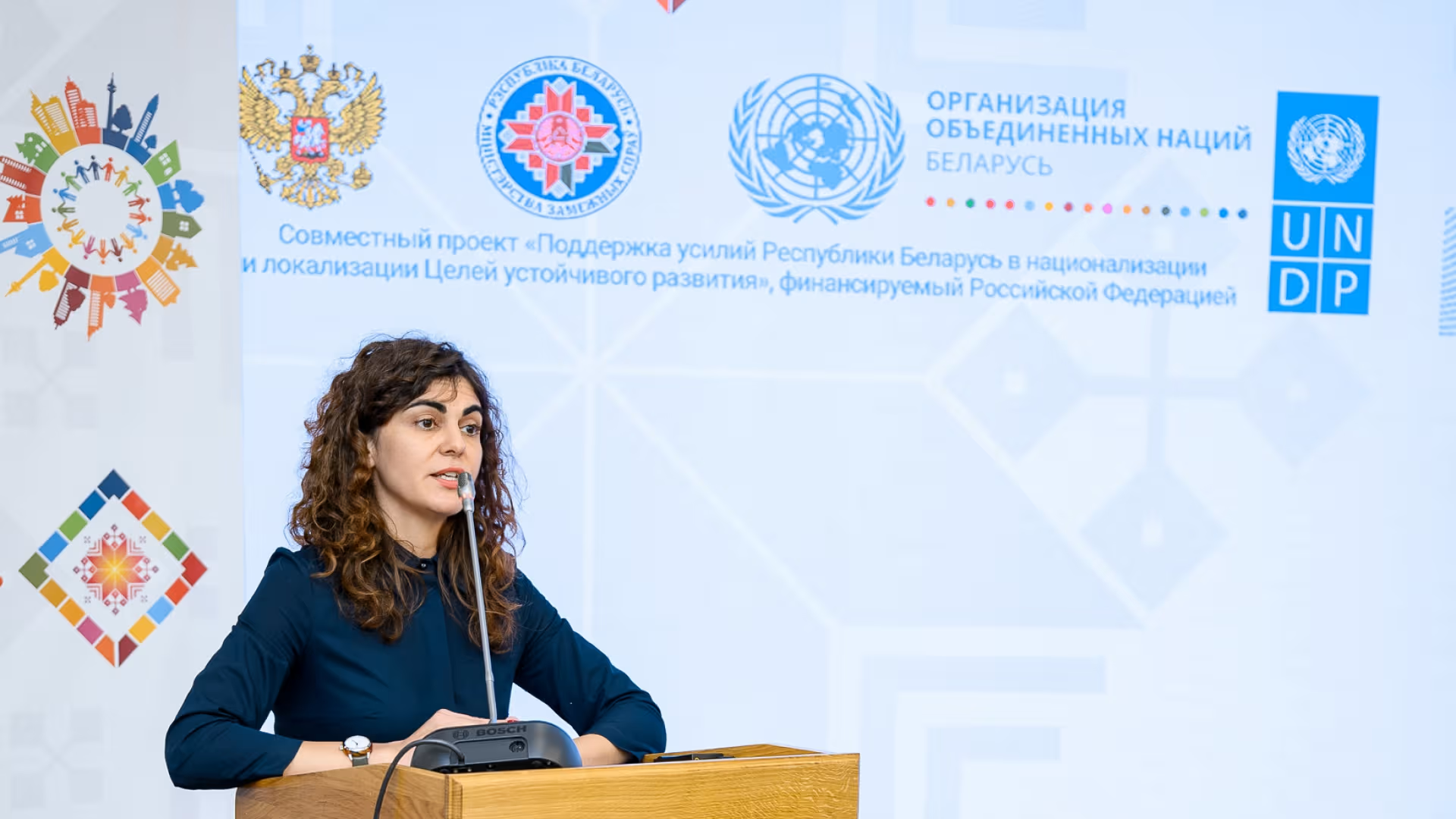
Lilia Sabirova, First Secretary of the Embassy of the Russian Federation in the Republic of Belarus, delivered a welcoming speech. She emphasized that the Russian Federation is committed to implementing the 2030 Agenda and views the Sustainable Development Goals as a unifying factor that requires the consolidation of efforts by the international community and the mobilization of available resources. Lilia Sabirova paid special attention to the importance of countries transitioning to more affordable and clean energy, noting that thanks to the Belarusian Nuclear Power Plant, built with the support of the “Rosatom” State Atomic Energy Corporation, Belarus is already among the nuclear powers and has a reliable, safe, and affordable source of energy that meets the needs of both the real sector of the economy and the country’s population, covering about 40% of domestic electricity demand. She emphasized that Russia provides comprehensive support to countries in achieving all the SDGs. In Belarus within the Joint Project “Support to the Efforts of the Republic of Belarus in Nationalization and Localization of SDGs”, funded by the Russian Federation, SDG communication strategy has been developed, methodological foundations for assessing legislation in terms of its compliance with the SDGs have been established, 21 SDG pilot initiatives have been implemented, National Multidimensional Poverty Index has been calculated. Lilia Sabirova confirmed the Russian Federation’s commitment to continue providing support to Belarus in promoting the topic of sustainable development, both through the UN system and within the Union State.
Konstantin Anoshenko, Deputy Minister of Energy of the Republic of Belarus, delivered the report “Nuclear Energy as a Basis for Sustainable Development of the Energy Sector of the Republic of Belarus”.He noted the modest development of the nuclear industry amid the rapid growth of solar and wind energy and reported that today there are just over 400 reactors operating worldwide, with a total capacity of about 180 gigawatts, and, according to IAEA estimates, by 2050 global capacity could reach between 561 and nearly 1,000 gigawatts. Konstantin Anoshenko described Belarus’s choice in favor of nuclear energy as a conscious response to all three components of the SDG 7 (energy affordability, clean generation, reliable energy supply). The Belarusian Nuclear Power Plant has already generated over 66 billion kWh, displacing about 16 billion cubic meters of gas; it accounts for up to 40% of domestic electricity consumption and annually reduces emissions by more than 7 million tons of CO₂. It also fosters new competencies, enhances the prestige of engineering professions, and stimulates the development of electric transport and infrastructure. The Deputy Minister emphasized Belarus’s interest in further developing the industry in partnership with the “Rosatom” State Atomic Energy Corporation, including the construction of the third power unit of the Belarusian Nuclear Power Plant and a second nuclear power plant. In conclusion, he emphasized that nuclear energy provides Belarus with reliable, climate‑independent power generation and serves as a technological impetus, strengthening the country’s independence and economic resilience.
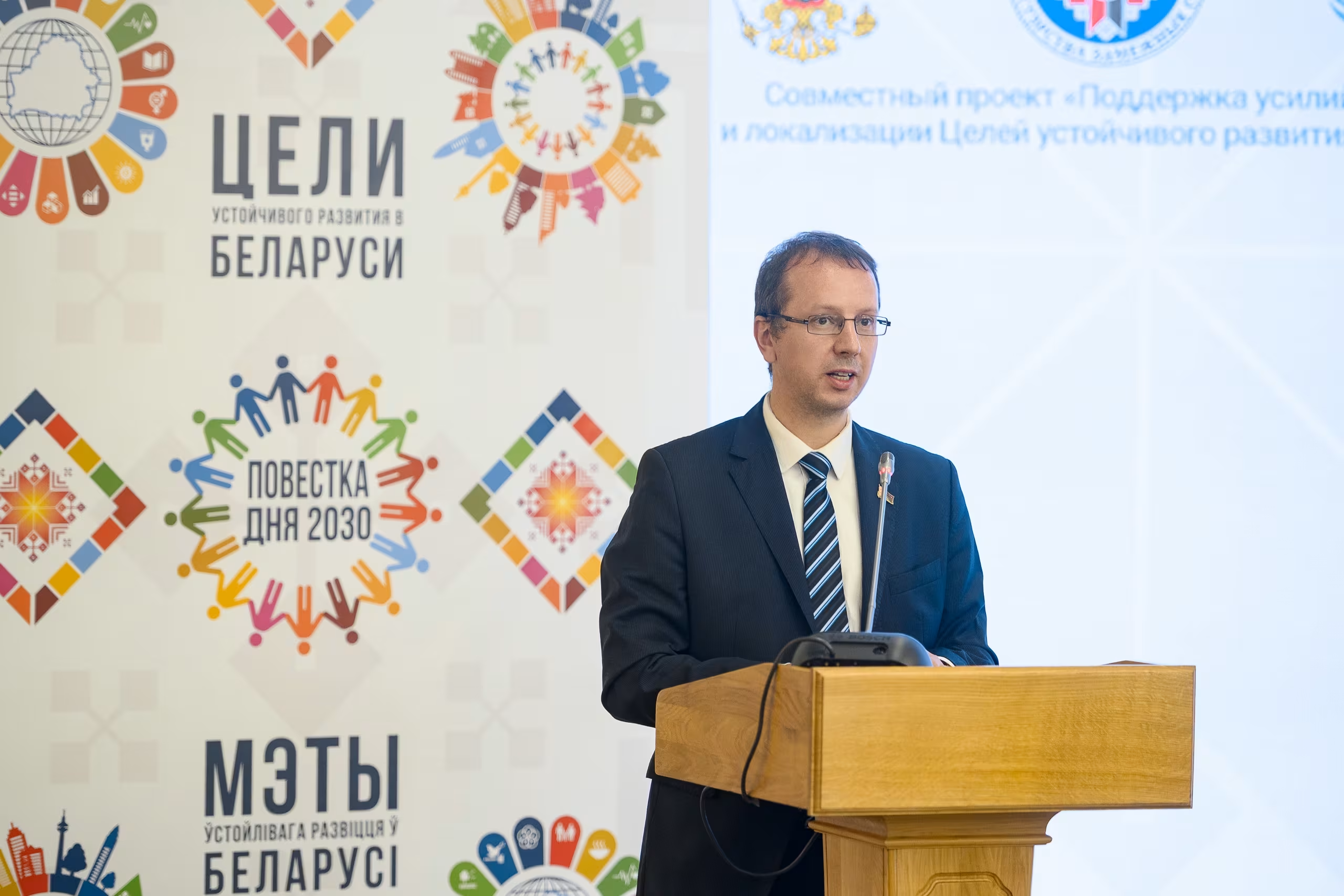


Stanislav Levitsky, Director of the “Rosatom” State Atomic Energy Corporation Country Office in the Republic of Belarus, delivered the report “The Role of Nuclear Energy in Achieving the Sustainable Development Goals. Supporting Youth Initiatives”. He noted the key role of nuclear energy in achieving the Sustainable Development Goals and in building sustainable energy systems, emphasizing the significant energy and environmental impact of the nuclear industry. Stanislav Levitsky informed that Rosatom’s strategic goal is to build 50 power units of large and small capacity, including the third power unit of the Belarusian Nuclear Power Plant, which will become the largest project of Belarusian‑Russian cooperation. He noted that the Belarusian Nuclear Power Plant has become a driver of innovative development, giving impetus to more than 40 projects in related industries. The country has opened its first Additive Technologies Center, commissioned new social facilities, developed its infrastructure, and implemented projects in nuclear medicine, energy storage systems, electric transport, and robotics. In addition, youth initiatives and forums are actively supported, including International Smart Holidays project, Global Atomic Quiz, Global HackAtom, Icebreaker of Knowledge, Obninsk NEW, Forces. In conclusion, Stanislav Levitsky emphasized that nuclear power is not only a reliable low‑carbon source of energy but also a powerful driver of technological development, innovation, and the formation of new competencies, contributing to the achievement of the Sustainable Development Goals.
Alexey Luksha, Youth Ambassador for the SDG 6 “Clean Water and Sanitation” of the fifth convocation, delivered the report “Affordable and Clean Energy: The Role of SDG Youth Ambassadors in Achieving the goals of 2030 Agenda”. He emphasized that ensuring universal access to reliable, sustainable, and modern energy supply is a key condition for achieving the SDG 7, and that young people and the specialized institute of SDG Youth Ambassadors play an important role in promoting this Goal. Among the main areas of work for the Youth Ambassadors of the SDGs, Alexey Luksha highlighted the implementation of the “Sustainable Summer” and “Sustainable University” projects, participation in national and international forums, the implementation of environmental initiatives, as well as active information and educational activities aimed at fostering a culture of energy conservation and responsible consumption. He emphasized that the SDG Youth Ambassadors serve as a link between global goals and everyday life, demonstrating practical steps through which the younger generation contributes to achieving the SDGs and advancing the 2030 Agenda.

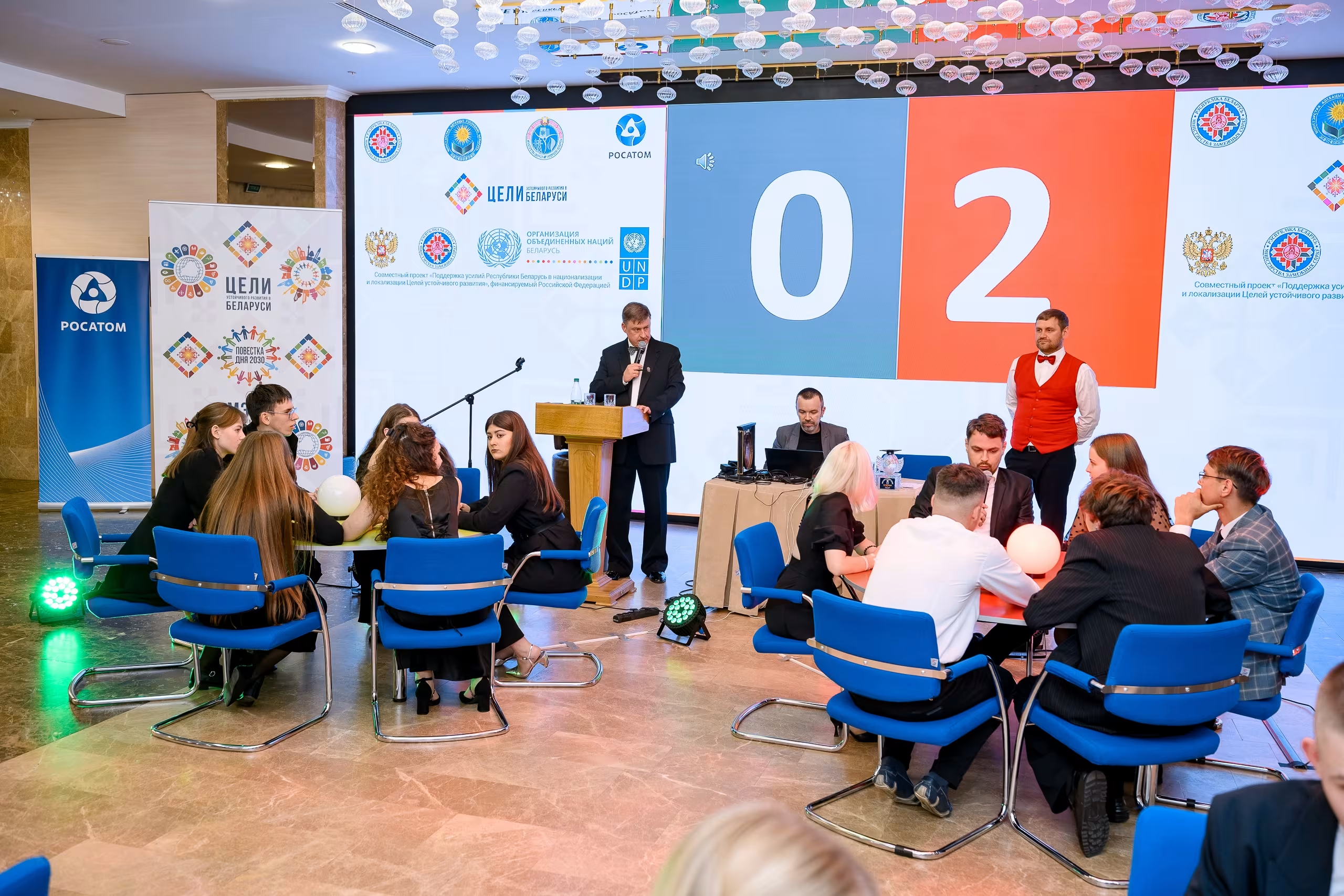
The forum continued in the format of the thematic intellectual game “What?” Where? When?”. The participants were divided into seven teams: Tachyon, Impulse, Atom, Iskra, Strike, ECO‑LOGICAL, and Persistent Development. Each team included five Youth Ambassadors of the SDGs and one professional player from the “What? Where? When?” youth team.
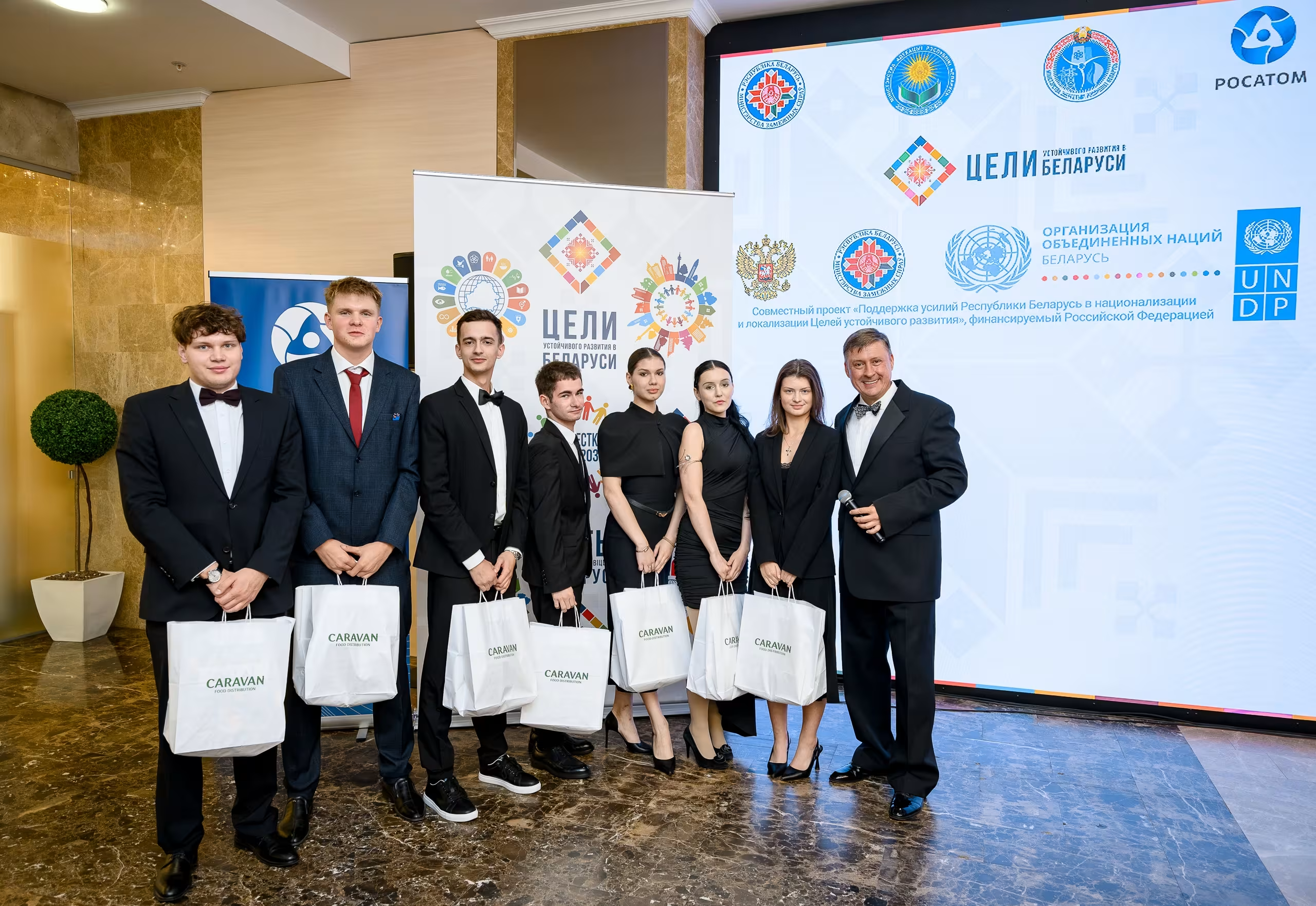
Based on the results of the game, the Atom team emerged victorious, and Alexey Luksha, Youth Ambassador for the SDG 6 “Clean Water and Sanitation” of the fifth convocation, was recognized as the best player and awarded the “Crystal Owl” prize.

Presentations by the speakers (Rus):
The Role of Nuclear Energy in Achieving Sustainable Development Goals. Supporting Youth Initiatives
UNDP’s contribution to the SDG 7 achievement in Belarus
Affordable and Clean Energy: The Role of SDG Youth Ambassadors in Achieving the goal of 2030 Agenda
The forum is organized by the Ministry of Foreign Affairs of the Republic of Belarus, Ministry of Education of the Republic of Belarus, Ministry of Energy of the Republic of Belarus, “Rosatom” State Atomic Energy Corporation, Russian Federation with the support of the United Nations Development Programme in the Republic of Belarus within the Joint Project “Support to the Efforts of the Republic of Belarus in Nationalization and Localization of SDGs”, funded by the Russian Federation.
